Showing posts with label Cancer. Show all posts

Wednesday, June 7, 2017

Ten-Year Diagnosversary

It's hard to fathom, but it's been a decade since my life flipped on its head, to put it mildly. It feels longer, it feels a lot shorter. But this, what I have now, it's all I remember. Here's how it started, and what happened since. If you want to get a really in-depth look at the journey, my book is available on Amazon. Shameless plug out of the way, here's the start of the new me.

Ten years ago today, I woke in the hospital in a state of uncertainty. I'd been admitted to the hospital a week before with a 104.5°F fever and touching tonsils. Days of tests and negative results later, one doctor came in and said he'd found a few free-floating blast cells. "We're not sure, but it might be leukemia."

That was the day before. That morning, I was pretty sure it would come out negative just like all the others. And yet, there was that part of me, the part that's always been there, that told me this was real. So when the doctor came in and asked to speak with my mom outside, I wasn't surprised, just tired. I hadn't really slept the night before, too annoyed at constant nurses' interruptions and a 6am jackhammer to actually approach sleep in any real form. My mom came in, and there was utter devastation on her face. She'd held out hope even when I hadn't. And then she told me. "It's leukemia."

I thought I'd be upset, but I wasn't. Just numb. I thought emotions would pop up, but they didn't. I just sat there, absorbing my new life, and then faded out. I guess I imploded, just stopped existing—it seemed a far better option than being me at that moment.

The rest of the day was spent going over the treatment and a bunch of other stuff, but I couldn't hold onto a thought to save my life—besides, keeping me alive was the doctor's job, gave me plenty of time to tangent my brains out. Everything from wondering how the hospital masks made the air taste like the texture of cardboard to what I'd done in a previous life to deserve this to wondering what it must be like to walk down the hall to one's execution to how white the walls were in every single room.

But I never, ever, ever, ever would have guessed in a septillion years what lay in store for me over the next ten years of my life. Cancer, eh, wasn't too bad. I mean, lots of puking, sure that sucked, and so did the pain, and the hair loss and the emotional trauma of, you know, cancer and stuff—but had I known what was coming, I would have wished I could stay like that for the rest of my life.

See, everyone told me stories about all these other survivors who got cancer, fought the good fight, and then recovered and went on to do great things and their lives were fine. So when I entered remission, I was stoked—no more hospital!

At least, until the treatment that had saved my life turned on me and tried to shut my lungs down. Until I had to be put into a coma. Until I was given two weeks to live. Until I miraculously managed to survive and found myself a hundred pounds heavier, with joints that were starting to deteriorate, with a drug addiction to the opiates used to keep me comfortable when I was supposed to be in my last few days of life, with flashbacks and memories I wanted to shut away and forget but never could.

That's how I found out the truth—cancer was only the beginning. There are side effects of getting to life, and I thought I was alone in that for a long time, that I was some aberrant statistic and every other cancer survivor had a great life. But then I learned I wasn't the only one. In fact, far from it. Really, survivors have a whole slew of physical, mental, and emotional side effects from their treatments.

So I decided to make something of my experience. I spent years writing a book between numerous joint replacement surgeries, telling the story of how life after cancer can be just as difficult as cancer itself, how the battle isn't really ever over, how we need to continue to support survivors long after their cancer is gone. And, finally, I published it.

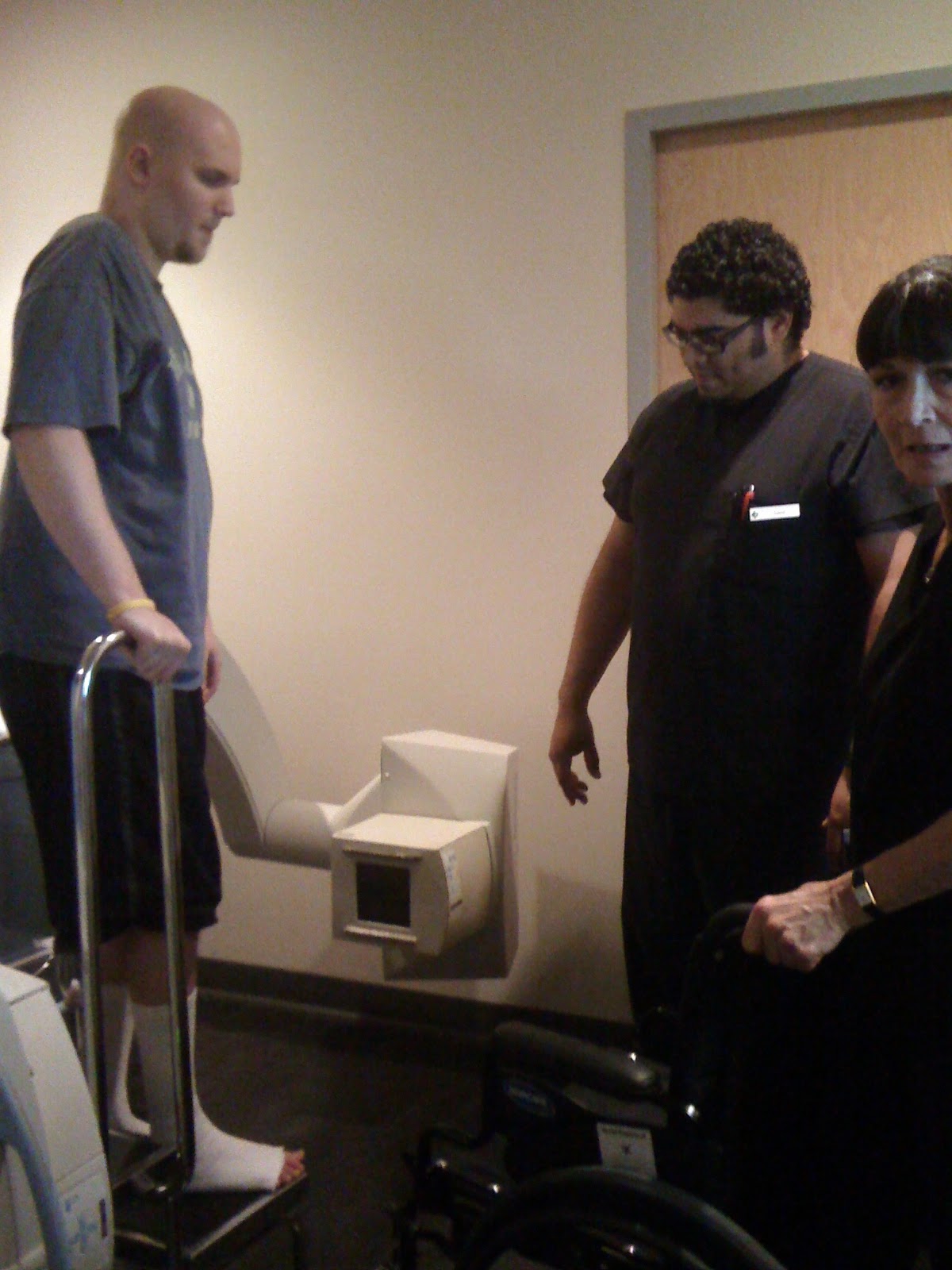
Two fake hips, one fake knee, one donor knee,
two donor ankles with screws, shoulders not in view
In these last ten years, I've had ten joint replacements, with more to come. I've dealt with drug addiction, chronic pain, trauma, depression, anxiety, a body covered in scars, the realization my super-awesome-beautiful hair was never coming back, a nervous breakdown, and lots of "little" things that would take up pages and pages to list.

Yet, here I am. Alive. Trying my best to make something of all this. Laughing through it as best I can, fighting the pain in my bones and in my head, struggling to create a life I can truly enjoy. So, no, life after cancer isn't all puppies and rainbows and you'll be perfectly fine, but it's not unlivable. Despite it all, there have been things I've enjoyed, and I found a purpose. That's how you survive, that's how you take all this crap and do something with it, you find meaning in it. And how did I find that purpose?

I made my own.

Saturday, August 2, 2014

Top Ten Zen #10: True Strength

Hi blog,

Well...this is it. The final post down! (Insert song here...you know the one)


Top Ten Zen

Andrew and Nick have compiled a list of Zen-like philosophies comprised firstly of a quote, an interpretation of said quote, and finally a story to drive their point home. This list can aid you in doing anything from completing a 100-mile race to surviving cancer, or obtaining any goal you set your mind to. 

Here are the previous posts for those who missed them:
"True strength is found in the face of adversity."


The Survivor’s Take:  It is in hardship that you can get the best glimpse of how strong you truly are. And usually, you’re a lot stronger than you ever imagined.
The Runner’s Take:  See the mountain not as a something to lament about, but rather as an opportunity to prove yourself, either against yourself or your competitors.

Survivor’s Tales: When people find out what I’ve been through, the most frequent comment doled out to me is: “Wow! I could never go through what you went through! You must be so brave and/or strong (they don’t usually say “and/or”) to go through all that!” But I’m not sure that I’m any stronger or braver than anyone else if I’m being honest. Prior to my diagnosis, I would have said exactly the same thing: that I could never go through something so traumatic and difficult. However, that’s exactly what happened. Lurking somewhere within me was an unrelenting strength that refused to let me give up, that refused to let me give in. I don’t think I would have discovered it had I not been diagnosed with leukemia, and I think it’s inside us all. It can be difficult to truly know the measure of your potential until you face hardship. However, when you do find that adversity, it’s amazing what sort of strength you can discover deep within you.

Mountain Tales: I was approaching mile 90 of Ronda del Cims. I’d run out far ahead of Carles (now 4th place) and was trying to gain on 2nd place. I followed flag after flag as the course went off trail and started bushwhacking through high brush and small streams. It was 7:00am, 30 degrees outside and I was soaked! The flags taunted me as they seemed to aimlessly wander back and forth across a powerful 10-foot stream. I slipped once or twice, soaking my shoes, and resolved once again to go crashing through the thick brush. About two hours passed and a very infuriated, agitated Nick finally breached tree level and came into a clearing. I looked back at the hell that I’d just ascended. High bushes, cold streams, no trail, no footing. Adversity at its finest. Each step I took was one more step that I conquered and I reassured myself that I’d likely not come across anything worse than that for the remainder of the race.


Beautiful, but not quite the place you would want to run


Of course, just because we are sharing our own extreme examples does not mean that these philosophies are all strictly for extreme situations. We share these because they can be used by anyone in the proper situations and we invite you, dear reader, to take these helpful tips into the world to use as you see fit. Feel free to hoard them or share them with others. It is both of our hope that these do some good somewhere, and so we wish you luck in your journey of a thousand Zen-filled steps.

And that concludes Top Ten Zen! I would like to say it has been an honor for us both to be able to do this series and be able to share it with so many people. We have received very heart-warming and enthusiastic feedback from many of you and are touched that we have been able to offer help and guidance to a number of people. What started off as a mentality Nick adopted for a race turned into a comparison between styles of survival between us when it came to racing and beating cancer and then morphed into an idea for this series. I have to say, it really has been an enormous pleasure to be able to share our thoughts and experiences with you all and hope that our books have a similar effect when they come out in the near future. You are all, every one of you, fantastic.

Stay tuned to Andrew's continual progress in his recovery as well as his writings and musings at: http://survivingthecure.blogspot.com/
Keep up with Nick as he continues to race the most grueling races he can find at: http://ultrademus.blogspot.com/

Andrew Bundy
Nick Hollon

Wednesday, July 30, 2014

Top Ten Zen #7: Your Worst Enemy

Hey blog,

This post might seem a little depressing. In truth, it's kind of a mini-series within the series, so it ties into a much happier and uplifting post! Don't worry, everything works out...look, a meditating kitty! See? Told you.

Hopefully this makes up for the semi-depressing post  


Top Ten Zen

Andrew and Nick have compiled a list of Zen-like philosophies comprised firstly of a quote, an interpretation of said quote, and finally a story to drive their point home. This list can aid you in doing anything from completing a 100-mile race to surviving cancer, or obtaining any goal you set your mind to. 

Here are the previous posts for those who missed them:
  1. The journey of a thousand miles begins with a single step
  2. Body follows mind
  3. The faster you hurry, the slower you go
  4. You are not bound by your past
  5. Life is only available in the here and now
  6. You are the author of every next moment

Nick on the verge of deciding he
wanted to quit life


"Your own worst enemy lies within."


The Survivor’s Take: Nothing hurts you more than your own negative thoughts.
The Runner’s Take:  The mind is the culprit of quitting.

Survivor’s Tales: After suffering through cancer and GVHD and just barely escaping from the hospital with my life by the thinnest edge, you would assume that I would be thrilled to be out in the world, that I gained a new appreciation of life. No. Instead, I looked at the scars and my bloated figure and felt an intense black hatred for myself bursting through to infest any hints of happiness and gratitude that dared poke its head up. As a result of this self-loathing, I began to heavily abuse my medications in an attempt to blot out conscious thought and all the pain that came with it. I could have chosen to be happy about surviving, but instead I wallowed in agonizing self-pity and righteous self-hatred. I chose that of my own volition, angry and hurt by everything that happened to me, disgusted by my appearance. I chose that path. But as we’ll see in this next post, although you can make yourself quite miserable with just the flick of a thought, you can also instill a great deal of satisfaction in the same manner.

Mountain Tales:  It was 3:30am, some 19 hours into the Ronda del Cims. Carles (3rd place) and I were deep into the race and had accumulated over 30,000 feet of gain. We were far from the finish and battling through the night together. Passing a stream Carles looked at me and said “Quince minutos llegamos.” Fifteen more minutes and the two of us would be at the mile 85 aid station, Illa. Thirty minutes later, Carles glanced over and said to me “Cinco minutos, seguro!” Five minutes clicked away with no aid station in sight. The two of us hurt, our pace was fading, our energy dwindling and our morale all but vanished. “Does Carles even know what he’s doing?” I could feel my body weaken as the poisonous thoughts continued to fester in my mind. I stopped. I had to change my mindset. I looked up at the full moon, pine trees blocking off the distant high peaks, and I felt alive and blessed to be wandering through the Pyrenees. I smiled and resolved that the damned aid station could have been hours away, it didn’t matter. I’d made peace with my own worst enemy.


Andrew's worst enemy lies within and a little to the right

Of course, just because we are sharing our own extreme examples does not mean that these philosophies are all strictly for extreme situations. We share these because they can be used by anyone in the proper situations and we invite you, dear reader, to take these helpful tips into the world to use as you see fit. Feel free to hoard them or share them with others. It is both of our hope that these do some good somewhere, and so we wish you luck in your journey of a thousand Zen-filled steps.

Nick Hollon
Andrew Bundy

Tuesday, July 29, 2014

Top Ten Zen #6: Every Next Moment

Hi blog,

One more than halfway there! (Insert song here) Sorry, I had to hum a few lines of Bon Jovi. Shall we get on with it then?


Top Ten Zen

Andrew and Nick have compiled a list of Zen-like philosophies comprised firstly of a quote, an interpretation of said quote, and finally a story to drive their point home. This list can aid you in doing anything from completing a 100-mile race to surviving cancer, or obtaining any goal you set your mind to. 

Here are the previous posts for those who missed them:
  1. The journey of a thousand miles begins with a single step 
  2. Body follows mind
  3. The faster you hurry, the slower you go
  4. You are not bound by your past
  5. Life is only available in the here and now


The author of every next "S"


"You are the author of every next moment."


The Survivor’s Take:  You get to decide how to handle your future, no matter how glum or bleak it looks. You can either choose to think poorly or you can resolve to think positively in every next moment.
The Runner’s Take:  Events are just events, nothing more. How you react to that climb, that descent or that long stretch of road is entirely up to you.

Survivor’s Tales:  When I was first diagnosed with leukemia just three weeks before I should have graduated high school, I was understandably a little bummed out. After all…I had cancer! For the first day of officially being a cancer patient I was numb and quiet and said next to nothing, just nodded occasionally. However, by the next day I wrested my mental faculties away from the shock and started to think about what would be happening to me. “Well,” I told myself. “You can either be abjectly miserable and have a crappy time, or you can approach this with a smile and a middle finger toward your stupid bone marrow cells.” I opted for the second choice, and sought out a silver lining. Well, I didn’t have to take any finals! No teacher would dock points to poor ol’ me for not showing up to take the tests because I was being pumped full of chemotherapy drugs. I seized upon that (amongst other positives) and chose how I would feel in that next moment and all the ones after it.

Mountain Tales: 20 hours into Ronda del Cims I was coming off of the backside of the longest climb of the race, Pic Negre. The trail was a quad murdering combination of steep talus slopes, scattered rocks and cold biting wind. I’d kept 5th place up until this point but I glanced back and could see several runners closing in on me up from above. I took a step forward and smashed my entire right foot sideways into a rock, knocking it loose and groaning loudly as it whacked into my left ankle. Initially, it hurt. But I immediately thought back to the above quote, “I decide.” I whispered to myself. I tried hard and managed to forget about the pain.  I lifted my head up high and could feel my legs cramping and my stomach growling. I loved running the descents back home, so what was the difference now? “There isn’t one,” I told myself. Faking a smile, I drifted down into the trees as the lights of my competition faded behind me.


Nick decides one finger is enough

Of course, just because we are sharing our own extreme examples does not mean that these philosophies are all strictly for extreme situations. We share these because they can be used by anyone in the proper situations and we invite you, dear reader, to take these helpful tips into the world to use as you see fit. Feel free to hoard them or share them with others. It is both of our hope that these do some good somewhere, and so we wish you luck in your journey of a thousand Zen-filled steps.

Andrew Bundy
Nick Hollon

Friday, March 28, 2014

Awareness Week: Life is Mental

Hi blog,

Well, today is the end of Awareness Week, it's the last post. Subsequently, I also think it might be the most important. This post isn't just for cancer patients and survivors, it's for EVERYONE. Not only is there a little something for everyone to take away, but there's also an enormous amount of awareness (go figure) embedded within the words that will follow these. So sit back (or forward, maybe stand if you want, whatever you like), hold on, and use your eyeballs.


Cancer isn't just about cancer. I can hear you scratching your heads from here (might I suggest a better shampoo?), but hear me out. The actual cancer itself is just part of the problem, there's so many more aspects of the disease that come into play, both directly and indirectly. In my previous post I discussed two side effects that don't get a lot of attention, but left out the most important of all side effects. It's an almost taboo subject in our society, regardless of whether or not you've had cancer. But for cancer survivors, it's one of the biggest hurdles for recovering and living a normal life. It's something I have struggled with for some time and am slowly making progress on. Give up? It's a little something called "mental issues." (Although I suspect the title might have given it away some)

Yes, mental illness is extremely common amongst cancer survivors and patients. It makes perfect sense when you think about it, but most people don't. It is an underwhelmingly undiscussed topic both in cancer recovery and in life in general. People hate talking about mental illness. My theories on why this is the case are not relevant to this blog, although I have several. The goal of Awareness Week is to spread, wait for it...AWARENESS about the problems that cancer patients and survivors must go through. It is an enormously difficult thing to piece your life back together after being dealt such a crippling physical blow, but you and everyone around you is so focused on getting your physical health in as good a shape as they can that often your mental state is neglected to some degree. The people around you, those who are supporting you, don't really understand that not only are you battling the cancer, but also any range of mental and emotional problems such as: depression, anxiety, paranoia, intense anger, panic attacks, nervous breakdowns, manic behavior, suicidal thoughts and tendencies, and the list goes on.

There are a few aspects of this topic that I would like to cover. One for the patient/survivor, and another for those supporting them.

How to cope with mental pain:
  • Depression: Probably the most common feeling associate with a cancer diagnosis, both for the patient and their family and friends, depression can be a difficult problem to kick. Remember that there are social workers at the hospital who are used to talking to cancer patients and have a sympathetic ear, they will listen if you talk to them. Also, don't be afraid or ashamed to ask for
    anti-depressants, they can help to improve your mood to some degree and (if you read the first post) being in a better mood can actually increase your chances of survival. Another good way to stave off depression: laugh (mentioned in the first post). By laughing, you are telling yourself that things aren't completely hopeless, that you can still find joy in the world. Finding some happiness  will go a long way toward dispelling some of that darkness that threatens to cast a pall over your thoughts. One last tip: talk to yourself. Tell yourself that you are feeling good and that you will get through this. At first, it will seem silly and like you're lying to yourself, but if you repeat this to yourself often enough, you will start to believe it and it might make all the difference in the world.
  • Anger: It begins with the diagnosis itself. Being told that your life is about to radically change, likely forever, is enough to rock even the most thick-skinned people to their very core. There is a sense of betrayal, your body has turned on you and is eating you from the inside out. That's normal. Anger is normal. It is extremely difficult to be able to direct all of that hate and fury to the cancer though, because you can't necessarily see it and so a lot of the anger ends up transferring to people around you. Inevitably, you will snap at somebody you care about for doing something that normally would not bother you in the least, but without an outlet for your anger, you will lash out at those closest to you. It is your duty to apologize and let that person know that you didn't mean it. The best thing you can do to actually deal with the anger is to find an outlet for it, whether it is in violent video games, beating a piƱata, or yelling into a pillow, if you can find a method of dispensing that anger into an inanimate object, it will alleviate the rage to some degree.
  • Anxiety: Probably the issue that I have the most problem with myself, anxiety can be a nearly crippling force that threatens to overwhelm you in every possible way. Luckily, there are a number of anti-anxiety medications available and this will dull the most potent effects of the  
    anxiety. It would help to learn some relaxation techniques (Relaxation Techniques for Stress Relief) as well, as this will serve to calm your thoughts and sooth your racing mind. Personally, I find that deep breathing (easy one: breathe in for 5 seconds, hold breath for 5 seconds, breathe out for 5 seconds, hold breath for 5 seconds, repeat as necessarily) and visualization (slowly putting yourself into a relaxing scene, like being on the beach, be sure to include all 5 senses) are the most helpful, but these methods differ from person to person and you should be encouraged to try as many out as you want to find the ones that work best for you.
  • Suicidal thoughts: Obviously the most dire of mental problems, if you (or the person you are supporting and/or caring for) starts to have suicidal tendencies or thoughts, you should tell your doctor right away so you (or they) can get the help that they need. This is not something you should tackle on your own, the stakes are too high for that. When things are this bad, you want as much professional help on your side as you can get. Here is a link to the Suicide Prevention Lifeline: click here.

How to offer support: To those who are trying to support somebody going through cancer, it can be a difficult experience for you as well. Watching somebody you care about slowly deteriorate before your eyes can be an excruciatingly painful experience. It might feel awkward to be around them because you don't know what to talk about and don't want to feel insensitive or like you're babying or pitying them. Sometimes this causes people to drift or pull away, and the support for the cancer patient or survivor will almost always dry up to some extent as time passes, but the people who care the most, the ones who the patient can count on, will stick with them even through the bad times. As a cancer survivor and somebody who lost quite a lot of support almost immediately after finding out I wasn't going to die, I have an inkling about the sort of things that work best for helping to support your friend/family member who is going through their treatment/trying to put their life back together afterward. Here are a few friendly tips for supporting the person you care about:

  • Treat them like a human: There is nothing worse than having every damn person give you a pitying glance when they find out what you're going through/have been through. It doesn't make somebody any less human to have gone through cancer, they are still the same person you used to know, so treat them like it! They will still like the same movies (most likely, unless it's a sad movie about cancer, then probably not so much), enjoy the same jokes, like the same music, but for some inexplicable reason people start to act like the survivor/patient is five-years old and needs to be coddled at every step. We don't. We want to be treated like an actual person, who deserves all of the respect and friendship that we had before we got sick. 
  • Share things with them: Don't feel like you have to hide aspects of your life from somebody just because they're going through cancer. You may feel guilty for being able to enjoy life while they're stuck in a bed, but you shouldn't. Cancer treatment is characterized by very boring periods followed by short, intense periods of crazy stuff. During those boring times, it helps to hear how  friends are doing and learning about their lives, sometimes it allows patients to live vicariously through you. Just because a patient is undergoing chemotherapy does not mean they don't want to hear anything about you. If you have a funny story about a bad date that you went on last Friday, tell it! Don't feel bad about sharing your life with them, they won't hold it against you that you aren't sick. 
  • Stick with them: It will be a hard thing to watch at times, but the single most reassuring thing for a cancer patient is to know that your friends are there for you when the going gets tough. It can be demoralizing when somebody you've known for years stops coming around and won't return your calls, it can make you feel abandoned. As their friend, you want to try and keep the person going through their cancer treatments in as good a mood as possible (see above). A very simple way to accomplish this is to put aside your discomfort for a few minutes and take the time to visit, call, or even just text them and see how things are going. 
  • Don't give up: Sometimes it is difficult to believe things will be okay. Sometimes you know things won't be okay. This does not mean you should just give up and stop trying to help. In fact, that is precisely when you should be even more supportive. When things get bad, it is imperative that the cancer patient gets as much encouragement as possible to help them get through it. As their friend/family, you have an opportunity to lift their spirits and help them fight off any feelings of hoplessness. If you hear them talking about giving up, don't be afraid to call them on it and tell them they are being ridiculous, because they are. Never let them give up, and you shouldn't either. Miracles can happen (I'm walking proof of that, I shouldn't be alive), so always have faith and be as supportive as human possible (and a little more).
And the last thing to remember is that there is no shame in having issues with your mental or emotional health. It is a very common side effect of going through cancer and the treatments associated with it. Ask for help, follow the guidelines above, and remember: things will get better if you believe they will get better. Life is 85% mental, your brain has a mysterious way of molding physical health and can be one of your greatest allies. A positive attitude is your greatest weapon. 

And supporters? Be there for them, they need you now more than ever. You have the power to help save their life, don't forget that. Make them smile, show them you're there for them, and never, ever give up on them.

Well, that's it for Awareness Week. I hope that you have learned some useful facts about cancer, cancer treatments, side effects, and ways to cope with all of the above. If you know somebody who is currently going through cancer, has gone through cancer, or has friends or family doing either of the former, please share this with them and spread some awareness. Hopefully by getting some of this information out there, we can all help change perception of cancer and learn how to better hope those who are forced to endure it.

If you have any comments or facts you wish to share, please post them in the comment section below (that's why it's there!). Have a wonderful day.

And blog? Thank you. Sincerely, your boss, Andrew

Friday, March 7, 2014

How Small Mexican Tacos Saved My Sanity

Dear blog,

I met with Nick yesterday for our weekly meeting on our book projects. While we did not do any writing and it was a little shorter than usual, he and I came out of the meeting with several very important things to take away.

  1. We discussed ways of making references to each other's work. 
  2. We read part of our books to each other and got feedback on them. Nick read to me a very emotionally raw and visceral experience he had that brought an upwelling of anger to him. He's an extremely expressive writer and it gave me a better understand of what he's gone through and what level his writing is on. It was also inspiring, because I have times when I just don't want to write at all, and knowing that I'm not the only one writing about painful times helps give me the kick in the pants (I don't normally wear pants) that I needed.
  3. We have a list of assignments to do. Admittedly, we've not been great at some of these, but we're both getting better about it. 
Following up on this whole book subject, I came up with something interesting. Nick was talking about how in his ultramarathoning, he's pushing his body to the limits, getting as close to death as he can without actually being in much danger. I compared it to going to the limit of my body's endurance as well, albeit not very willingly. There's a high that Nick gets from it, a feeling of higher purpose when he's so close to hitting the wall and giving up. It's something that he strives for in his running, he wants to approximate death in some way. I came up with a term for it that I thought both very apropos and kinda catchy: manufactured mortality. I'm curious to get some opinions on the term and if you think it fits with Nick's attempts to push his body to the very limit so he can experience something along the lines that I did to a simultaneously lesser and greater extent. What do you think of the term? Appropriate? Stupid? Catchy? Please let me know, I would appreciate it. I would hate to release this vile, evil, destructive Attack Puppy on you...maybe.


Blog...I'm reaching the hardest part of writing my memoirs. It's going to be a very hard week or two while I shove my way through it. I fully expect a couple tears to be shed and a lot of anxiety and stress to flood into my brain. I finally got past the point when I was put into a medically induced coma (March 2008, six years ago. I was taken out of the common exactly six years ago yesterday), but the worst has yet to come. The very next part describes how I should have died and begins the part of the story that I find the most important: what happens after you survive. For me, trying to adjust to life again after all that has happened to me is almost harder than surviving in the first place. I know I'm not the only one who has these problems, it's a lot more common than most people realize. The whole point of my book is to raise awareness for the side effects of treatment and hopefully to both inspire and help others in similar situations get through it. I also have a very lofty goal of possibly influencing policy in some way to provide a more cohesive and unified survivor program that would help those coming out of radiation treatments or chemotherapy or transplants only to find their bodies radically altered and suffering the side effects of surviving. I feel it's a topic hardly discussed and want to bring it to the foreground so something can be done to make life better for people after they have survived, so that they can better enjoy their lives with the freedom they deserve after such a harrowing and unfair experience. 

Do you know who was one of the greatest and most well respected heros of the American Revolution? George Washington, sure. The Marquis de Lafayette, yea okay. But you probably wouldn't have guessed...Benedict Arnold??? That's right, good ol' Benedict, before he turned traitor and pulled a him, was actually one of the most praised and well-liked of all of the Revolutionary figures. People loved him, his troops would follow him anywhere, and he was a brilliant tactician who was one of the most important for saving the Revolution in the critical early years. After being treated like crap, denied recognition by his superiors, wounded, bankrupted by giving almost all of his money to the cause of freedom, and having his honor impinged upon by politicians insulting his good name by falling him a Loyalist (to the British empire), he got fed up and defected. Luckily, America's first spy ring (Culper Ring, a very interesting group of civilians, read more about it here: The Culper Spy Ring) was able to discover his plans to sell West Point to the British (which would have almost certainly cost us the war) and although Arnold escaped, he would eventually die broke and mistrusted by even the British in England.

And now, I will not address the blog for a moment (sorry blog, I'll get back to you, I promise) and would like to talk to my readership. I've been trying to drum up more views and interest in my blog, as random as it is, and would love to reach a wider audience. So if you have read this blog and enjoy it, please share it with your friends or post it on your Twitter or Facebook. I will be extremely grateful, thank you! As an extra incentive to comment (shifting topic a smidge), I will start taking requests for short stories and plan to write a one thousand word short story every couple weeks based on some of those ideas and will give the person whose story idea I choose recognition for the idea! So if you've ever had a story idea that you thought was good but never got written, here's your chance to see that come to fruition!

Hello again blog! I told you I hadn't forgotten about you. As a show of appreciation for your patience, here's a pretty funny video that Nick made about small Mexican tacos. It's called...Ode to Small Mexican Tacos. I think you'll like it blog, I was cracking up the whole time he was showing it to me during our meeting yesterday. It helped me get through what would have been an otherwise difficult session by improving my mood and decreasing my anxiety. 


Well that's it for this week blog. Hopefully you enjoyed my words, and if not, well, not much you can do it about. 

Your master scribe, Andrew